
Last Updated: November 4, 2026
Quick Summary
Signs a septic tank is failing include sewage backing up into the home, slow drains and gurgling pipes, foul odors, and standing water or soggy, lush grass over the drainfield. Sewage backup is the most serious sign and calls for immediate professional help, since a septic tank problem can quickly become an emergency.
- Sewage backing up into the home is the most serious sign and needs immediate professional help.
- Several slow drains at once point to the septic system itself rather than a single clog.
- Foul sulfur or rotten-egg odors inside the home or above the tank signal a leak or backup.
- Standing water, spongy ground, or bright green grass over the drainfield suggests wastewater is reaching the surface.
- Heavy rain often worsens septic problems because saturated soil cannot absorb extra water.
Table of Contents
- Warning Signs Your Septic Tank Is Failing
- Standing Water, Soggy Ground and Lush Grass Over the Drainfield
- Is My Septic Tank Full or Clogged?
- Why Septic Tank Problems Get Worse When It Rains
- Septic Tank Problems and Solutions: A Symptom-to-Action Triage Guide
- What a Failed Septic System Costs to Repair or Replace
- Booking a Septic Inspection in Rainbow City
- Frequently Asked Questions
Signs your septic tank is failing usually show up inside the house first. A slow drain or a gurgling toilet can seem like a small annoyance, but these symptoms often point to a system that needs professional attention. Homeowners in the area often see the same warning signs again and again. Catching them early can save you from sewage backing up into your home and from a far larger repair bill later. For a checklist of the specific signs that it’s time to pump, see signs your septic tank needs pumping.
A septic system is a buried tank and a drainfield, sometimes called a leach field, that treat household wastewater on site (the EPA). The tank holds solids while lighter waste flows out to the drainfield. When something in that process breaks down, the symptoms tend to show up in your plumbing, your yard, or both.
Warning Signs Your Septic Tank Is Failing
Most septic problems follow a pattern. The early signs are easy to miss, and the later ones are hard to ignore. Here is what to watch for.
Sewage Backing Up Into the Home
Sewage backup is the most serious warning sign. It means wastewater has nowhere to go and is returning through your drains. Check for these signs:
- Water or waste in a shower or tub drain
- Toilets that bubble or overflow when you run water elsewhere
- Foul water pooling on floors near floor drains
If you see sewage in your home, stop using water right away and call a professional. Sewage carries bacteria, so avoid direct contact with it.
Slow Drains, Gurgling Pipes and Sluggish Toilets
Slow-moving drains are often the first sign that the system is struggling. Water takes longer to leave the sink or tub, and the toilet may flush weakly. Gurgling or bubbling sounds from the plumbing are another common clue. Those noises usually mean air is trapped in the pipes because wastewater is not moving freely.
One slow drain alone may just be a clog. When several drains slow down at once, the problem is more likely the septic system itself.
Foul Odors Indoors and Around the Yard
Sewage smells should not appear inside your home or around the tank. A strong sulfur or rotten-egg smell near drains, or an odor drifting across the yard above the tank or drainfield, points to a leak or a backup. Smell is one of the clearest signals, so do not ignore it.
Standing Water, Soggy Ground and Lush Grass Over the Drainfield
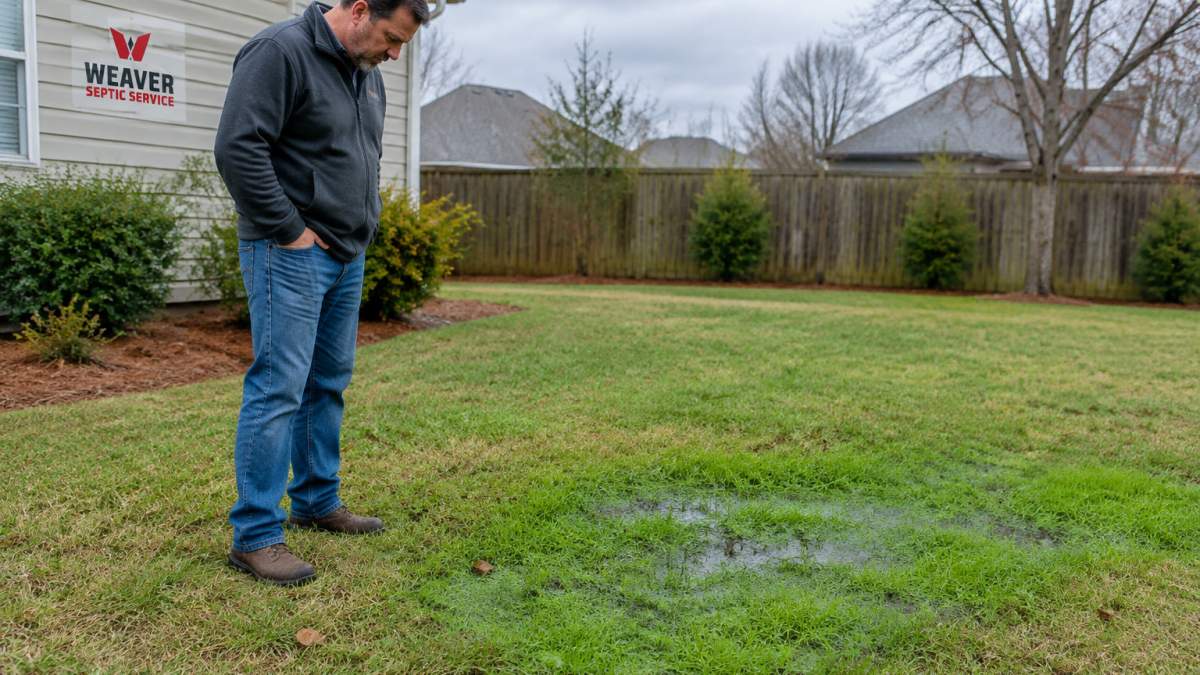
Look outside as well. The drainfield spreads treated wastewater into the soil. When it fails, that water can rise to the surface. Watch for:
- Standing water or damp spots that stay wet after dry weather
- Soggy ground that feels spongy underfoot
- Patches of unusually bright green or thick grass over the drainfield, even during a dry spell
Lush grass in one strip of the yard can look like good fertilizer. In many cases it is a sign that extra nutrients from wastewater are reaching the surface.
Is My Septic Tank Full or Clogged?
A full tank, a clogged line, a broken baffle, and a saturated drainfield can all produce the same three complaints: slow drains, gurgling, and odor. The cause determines the fix, so the goal is to separate a maintenance issue from a failure before anyone starts digging.
Full tank. The tank has filled with solids and scum to the point where there is little clear space left for wastewater to settle. The typical trigger is a missed pumping interval. To judge whether yours is overdue, see how often to pump a septic tank.
Clogged building drain or inlet. A blockage between the house and the tank, or at the tank inlet, can mimic a full tank. The tell is often that one side of the house or one fixture backs up first, or that a toilet gurgles only when a specific sink runs. A drain-cleaning cable may resolve this without any tank work.
Failed baffle or outlet. The baffles inside the tank keep scum from leaving with the effluent. When a baffle breaks or falls off, solids wash into the drainfield and clog the distribution pipes. This is a repair inside the tank, not a pumping, and it is one of the most common reasons a system that was pumped recently still fails.
Saturated or clogged drainfield. The soil absorption area has taken on more water than it can handle, or the biomat layer at the trench bottom has sealed up. The outdoor signs give this away: soggy ground, standing water, or a bright green strip over the trenches, often worse after rain.
A few questions help narrow it down before you call anyone:
- When was the tank last pumped, and do you have the record?
- Did the symptoms appear suddenly after one event, or build gradually?
- Are the problems indoors only, or is the yard showing wet ground or lush grass?
- Did anything change recently, such as a new garbage disposal, a house full of guests, or heavy rain?
A qualified technician settles the question with measurements rather than guesses. Expect the inspection to include checking the scum and sludge levels against the outlet, confirming the inlet and outlet baffles are intact, watching flow through the distribution box, and probing the drainfield for saturation.
Watch out: a pumped tank that still backs up within days is a strong signal the problem is in the drainfield or the distribution piping, not the tank, and repeating the pump will not solve it.
Why Septic Tank Problems Get Worse When It Rains
Heavy rain is one of the most common triggers for septic trouble. The soil around the drainfield can only absorb so much water. When the ground is already saturated, extra water from rain has nowhere to go, so the system backs up sooner.
This is why many homeowners notice symptoms only after a wet week. A system that seemed fine in dry weather may struggle during storms. If your septic problems seem to follow rainfall, mention that pattern to your service provider. It is a useful clue for diagnosis.
Septic Tank Problems and Solutions: A Symptom-to-Action Triage Guide
Use this quick guide to decide what to do next:
- Odor only, no backup: Schedule an inspection within the next week or two.
- Slow drains in several fixtures: Have the tank checked and pumped if it is due.
- Wet or spongy ground over the drainfield: Call a professional soon. The drainfield may be failing.
- Sewage backing up into the home: Stop using water and call for emergency service now.
The right next step depends on which symptoms you see and how fast they are getting worse. When in doubt, treat a backup as urgent.
What a Failed Septic System Costs to Repair or Replace
Diagnosis is only part of the picture, because the remedy and cost depend on which component failed. The more useful question is what happens after the diagnosis, because the remedy and the cost depend entirely on which component failed.
Pumping. The least expensive step and the first one to rule out. If the tank is simply full, pumping restores normal flow. Cost depends on tank size, how deep the lids sit, and whether the truck can reach the tank.
Baffle and lid repair. Replacing a broken inlet or outlet baffle or a cracked lid is a modest repair compared with drainfield work. It is worth doing whenever the tank is opened, because a failed baffle is a leading cause of solids reaching the drainfield.
Distribution box and pipe repair. If the distribution box is cracked, tilted, or clogged, effluent may be sent to one trench instead of all of them. Repairing or replacing the box and clearing the laterals can restore even distribution at a fraction of drainfield replacement cost.
Drainfield restoration or replacement. This is the large expense.
Full system replacement. When the tank itself is cracked or the drainfield cannot be salvaged, a new system may be the only path. Permitting, soil testing, and site access all factor in.
Several variables move the price more than anything else:
- Tank size and material, and how accessible the lids are
- Soil type and depth to the water table, which can force a more expensive design
- Whether the repair needs a permit and inspection
- Site access for a pump truck or excavation equipment
- How much of the system can be saved versus replaced
Septic system repairs and replacements are often subject to local permitting requirements. Confirm the current rules with your local health department before authorizing major work.
Acting early usually keeps the bill lower. To see what emergency service typically costs before you decide how to proceed, read the emergency septic service cost guide. A baffle repair or a distribution box fix made before the drainfield clogs is almost always cheaper than replacing the field.
The table below summarises the repair options and the factors that move the price, as described in this section.
| Repair option | When it applies | Cost driver |
|---|---|---|
| Pumping | Tank is simply full | Tank size, lid depth, truck access |
| Baffle and lid repair | Broken baffle or cracked lid | Modest compared with drainfield work |
| Distribution box and pipe repair | Cracked or clogged distribution box | Restores even flow at a fraction of field cost |
| Drainfield restoration or replacement | Field is saturated or clogged | Field size, soil, depth to groundwater |
| Full system replacement | Tank cracked or field unsalvageable | Permitting, soil testing, site access |
Booking a Septic Inspection in Rainbow City
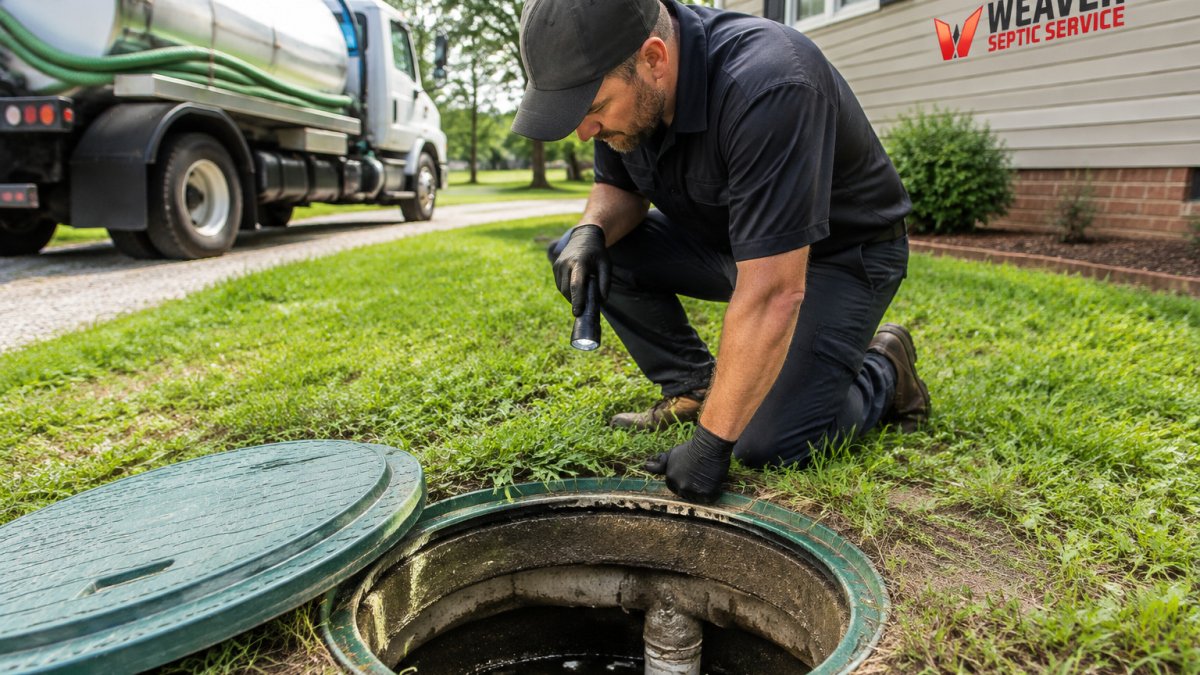
If you see any of these warning signs, an inspection is the best way to find the cause. A professional can check the tank level, look at the drainfield, and tell you whether you need pumping, repair, or a larger fix. Weaver Septic Service, LLC is licensed, bonded, and insured, and serves Gadsden and surrounding areas. Call to schedule an inspection and get a clear plan before a small problem becomes an emergency. You can also request septic tank pumping, cleaning, and inspection in Rainbow City directly online.
Frequently Asked Questions
What are the early signs that a septic system is failing?
The earliest signs are usually slow drains, gurgling pipes, and toilets that flush sluggishly. Foul odors near the tank or drainfield, and unusually green or spongy grass over the drainfield, often follow. If you notice any of these, schedule an inspection before the problem reaches your indoor plumbing. Catching it early often means a pumping or minor repair instead of a full replacement.
How can you tell if a septic tank is full or clogged?
A full tank typically needs pumping, and symptoms often appear gradually as solids build up. A clogged system, such as a blocked outlet baffle or clogged drainfield, can cause backups even when the tank level is normal. A licensed professional can measure the tank level, inspect the baffles, and check the drainfield to tell these apart. Do not assume pumping alone will fix a clog.
Why do septic tank problems get worse when it rains?
Heavy rain saturates the soil around the drainfield, so it cannot absorb wastewater as quickly. Water then backs up toward the house or surfaces as soggy ground and standing water. Systems that are already near capacity usually show symptoms first during wet weather. Limit water use during and after heavy rain, and call a professional if backups persist after the soil dries.
What is the most common cause of septic system failure?
Failure most often results from a tank that has not been pumped regularly, which lets solids flow into the drainfield and clog it. Overloading the system with excess water, flushing non-biodegradable items, and driving or parking on the drainfield also cause damage. Routine inspection and pumping, as recommended by a licensed professional, prevent most of these failures.
