
Last Updated: October 26, 2026
Quick Summary
A septic inspection before buying a house reveals whether the system will function properly after you take ownership and protects you from inheriting a failing system that could cost tens of thousands to replace or repair. Schedule the inspection with your general home inspection so all findings arrive together and you have time to negotiate if problems emerge.
- The inspector assesses tank condition, sludge levels, baffles, drain field performance, and system age but cannot pump the tank during a standard inspection.
- If sludge exceeds one-third of tank depth or scum exceeds one-third of tank depth, the system is overdue for pumping or has maintenance issues.
- The drain field must be at least 50 feet from wells and 10 feet from property lines in most jurisdictions.
- An inconclusive report may require a full pump-out or a trial period clause in the purchase contract for re-inspection after closing.
- Coordinate timing so you inspect after your offer is accepted but before final walkthrough to allow time for negotiations.
Table of Contents
- Why a Septic Inspection Matters Before You Close
- Understanding the Septic Inspection Process
- Your Septic Inspection Checklist for Buyers
- Spotting Septic System Red Flags During Inspection
- Septic Inspection Cost and What Affects Your Quote
- Interpreting Your Inspection Report and Next Steps
- Schedule Your Septic Inspection Today
- Frequently Asked Questions
Why a Septic Inspection Matters Before You Close
A septic inspection before buying a house reveals whether the system will function properly after you take ownership. This evaluation protects you from inheriting a failing system that could cost tens of thousands to replace or repair. Most homebuyers focus on the structure and appliances but overlook the septic system entirely, a costly mistake when the system backs up months after closing.
The septic system handles all wastewater from your home. If it fails, raw sewage backs up into your house, contaminates groundwater, and creates a health hazard. A pre-purchase inspection identifies problems early so you can make an informed decision about whether to proceed with the sale.
Understanding the Septic Inspection Process
A septic inspection assesses the system’s condition and functionality. Learn what components make up a septic system and how they work together to treat wastewater.
When to Schedule the Inspection in Your Purchase Timeline
If you wait until the final walkthrough, you won’t have time to negotiate repairs or request credits if problems emerge. If you inspect too early, before your offer is accepted, you’re paying out of pocket for a property you might not buy. Coordinate the septic inspection with your general home inspection so all findings arrive together.
What a Full Septic Inspection Includes
The inspector cannot pump the tank during a standard inspection, that’s a separate service. They can only assess what’s visible and accessible. If the tank hasn’t been pumped recently, sludge buildup may obscure a clear view of internal damage.
Your Septic Inspection Checklist for Buyers
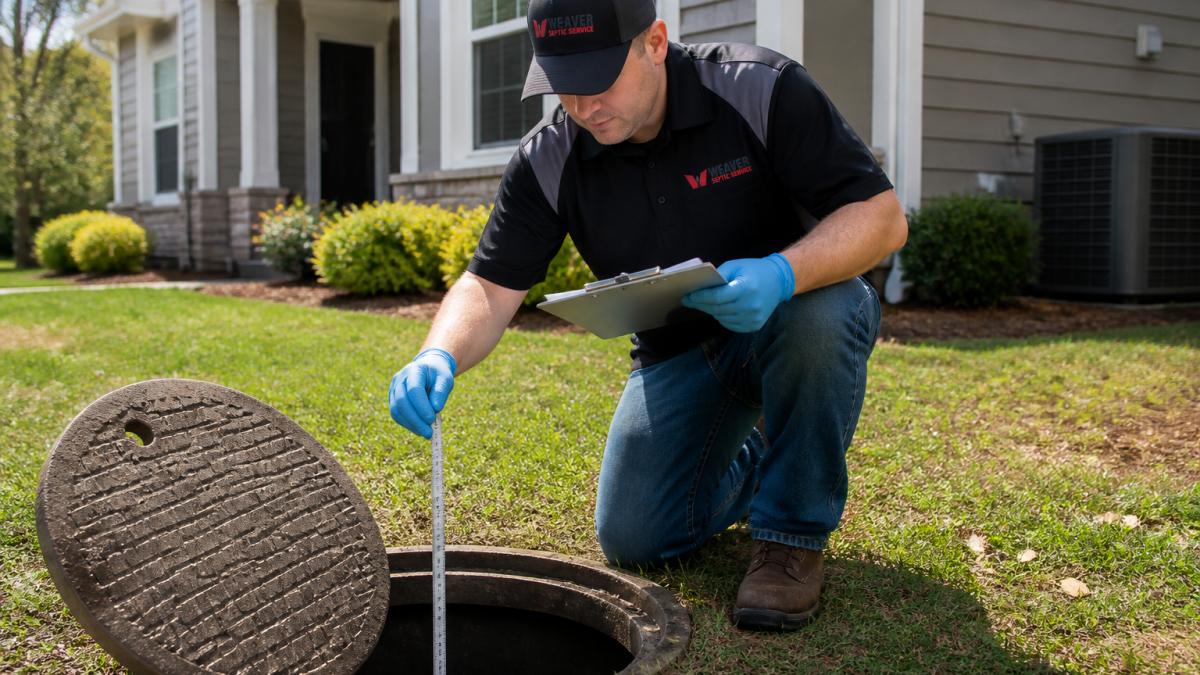
- Tank access: Is the access cover visible and reachable without digging?
- Tank material: Concrete, fiberglass, or plastic, and is it showing cracks or corrosion?
- Sludge and scum levels: How full is the tank, and when was it last pumped?
- Internal baffles and tees: Are they intact and properly positioned?
- Inlet and outlet filters: Are they clogged or damaged?
- Tank walls: Any cracks, leaks, or structural failure?
- Drain field surface: Are there wet spots, odors, or standing water?
- System age and type: Is it a conventional system, aerobic system, or engineered design?
- Permits and records: Are there permits on file, and is pumping history documented?
- Setbacks: Does the system meet local distance requirements from wells, property lines, and water sources?
Tank Condition and Structural Components
The inspector measures the distance from the tank bottom to the sludge layer. Understanding how often to pump your septic tank helps you recognize when maintenance is overdue. If sludge is more than one-third of the tank depth, the system is overdue for pumping. Excessive sludge means solids aren’t settling properly, and they’ll flow into the drain field and clog it. The scum layer (grease and oils floating on top) should be less than one-third of tank depth. High scum levels indicate grease problems from the kitchen or laundry.
Baffles, Tees, and Internal System Parts
The outlet tee is a pipe that extends into the tank to draw effluent from the middle layer, where liquid is clearest. If the tee is broken or misaligned, scum or sludge flows to the drain field. A clogged or damaged effluent filter traps solids before they leave the tank, protecting the drain field. If the filter is heavily soiled, it needs replacement.
Drain Field and Soil Absorption
A saturated drain field fails because the soil is either too dense to absorb water or the field is too small for the household. Heavy clay soils drain slowly. If the property slopes toward the drain field, surface water may be flooding it. The inspector also checks setback distances, the drain field must be at least 50 feet from wells and 10 feet from property lines in most jurisdictions, though local rules vary.
Spotting Septic System Red Flags During Inspection
Red flags during inspection signal that repair or replacement is likely. Understanding these warnings helps you evaluate the cost of ownership and negotiate the purchase price.
Warning Signs Inside and Around the Property
Inside the tank, if the inspector finds raw sewage flowing into the tank but no treated effluent flowing out, the outlet is blocked or the drain field is completely saturated. If the tank is full of grease or the effluent filter is caked with solids, the system has been neglected.
Age, Material, and Capacity Concerns
The inspector calculates required tank size based on bedrooms and local regulations. A system undersized for the property is a liability. Replacing it costs significantly more than a repair. If the system is aerobic (using air circulation to treat effluent), the pump and blower must run continuously. If they’ve failed, the system reverts to conventional treatment and may not function properly without repairs.
Septic Inspection Cost and What Affects Your Quote
Septic inspection pricing depends on the system and the work involved. Contact Weaver Septic Service, LLC for current pricing or a quote.
Contact Septic Tank Pumping & Septic Services in Gadsden, AL to discuss inspection costs and scheduling with a licensed professional.
Interpreting Your Inspection Report and Next Steps
The inspection report lists findings by category: tank condition, drain field performance, system age, maintenance history, and recommendations.
Understanding Inspection Limitations and Inconclusive Results
When the report says “inconclusive,” it means the inspector found no obvious failure but cannot rule out hidden problems. A full pump-out may be required for a complete assessment. Alternatively, you can request a trial period clause in the purchase contract, a 30 to 60-day window after closing to have the system re-inspected or pumped. If major problems emerge, you can negotiate repairs with the seller before the trial period ends.
Using Inspection Findings in Purchase Negotiations
If the system is near the end of its life but still serviceable, factor replacement cost into your decision. A new system installation is a major expense. Understanding the system’s age and condition helps you plan for future maintenance or replacement.
Schedule Your Septic Inspection Today
| Inspection Component | What It Reveals | Why It Matters |
|---|---|---|
| Tank access and condition | Cracks, corrosion, material type | Determines if tank needs repair or replacement |
| Sludge and scum levels | How full the tank is, pumping needs | Indicates maintenance history and drain field risk |
| Internal baffles and tees | Solids settling, effluent flow | Prevents solids from clogging the drain field |
| Drain field surface | Wet spots, odors, saturation | Shows if drain field is absorbing properly |
| System age and capacity | Installation date, tank size | Reveals if system meets current household needs |
| Permits and records | Code compliance, maintenance history | Verifies system was installed to code and serviced regularly |
Frequently Asked Questions
What does a septic inspection include when buying a house?
A full septic inspection examines the tank, baffles, tees, inlet and outlet pipes, effluent filter, drain field or leach field, and distribution box. The inspector performs a visual inspection of the tank interior (usually by opening the access point), reviews system records and maintenance history, checks for visible cracks or corrosion, tests water flow and drainage, and evaluates soil absorption around the drain field. Some inspectors may pump the tank to assess its condition more thoroughly, though this is not always part of a standard inspection.
What are the biggest red flags in a septic inspection?
Major red flags include sewage backup into the home, slow drains or standing water in the yard, visible cracks or corrosion in the tank, failed baffles or tees, a drain field showing signs of poor soil absorption, system age over 25-30 years without recent maintenance, no pumping records or maintenance history, tank material that is deteriorating (concrete, steel), system size inadequate for household size, and evidence of previous repairs or failed system components. Any of these can signal imminent failure and costly repairs.
How much does a septic inspection cost?
Septic inspection pricing depends on the work involved. Contact Weaver Septic Service, LLC for current pricing or a quote.
Can you buy a house with a failing septic system?
Technically yes, but it carries significant risk and financial liability. A failing system can cost $10,000-$25,000 or more to replace. Most lenders require a passing septic inspection before closing, and many sellers will not close without addressing critical failures. If you proceed with a failing system, negotiate repairs or credits with the seller, get a detailed repair estimate, and understand your long-term maintenance obligations. A qualified inspector can help clarify whether issues are minor repairs or signs of imminent failure.
